

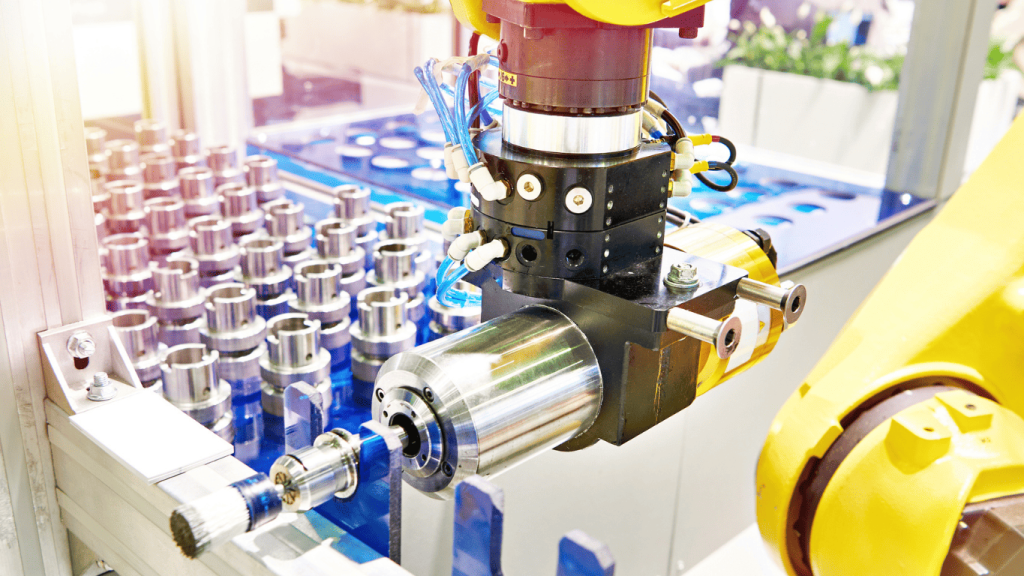
Introduction Actuators connect the virtual and physical domains of a system. These devices receive some form of energy as input and deliver motion as output. A controlling signal might also be there to allow energy conversion in a controlled way. There are various kinds of actuators available that are categorized on the basis of input […]

A sensor is a device that detects and responds to any kind of input from the environment. The input can be light, heat, motion, moisture, pressure, or any other parameter. It then sends information about these changes to a variety of other electronics, which in turn initiate or interrupt respective actions. Various types of sensors […]

In electrical circuits, active and passive components are the basic building elements. Each component has a unique impact on the operation and behavior of an electronic system. Through external power sources, active components like transistors and operational amplifiers dynamically affect electrical signals, enabling signal amplification and control. Conversely, passive parts—such as capacitors and resistors—have a […]

Introducing MOSFET The metal-oxide-semiconductor field-effect transistor (MOSFET) has become the most commonly used transistor in integrated circuits and electronic devices. MOSFETs have almost completely replaced bipolar junction transistors (BJTs) in digital circuits due to several advantageous characteristics. We will explore the working principles, structure, types, and applications of MOSFETs at an introductory level. MOSFET Structure […]

Introduction to FPGA and ASIC Technology Decades ago, when computation was getting complex and operations were difficult to perform, the tech world was more inclined to make a processor that could integrate numerous transistors on a microchip. Consequently, VLSI (very-large-scale integration) technology was introduced to embed billions of transistors on a single microchip easily. This […]
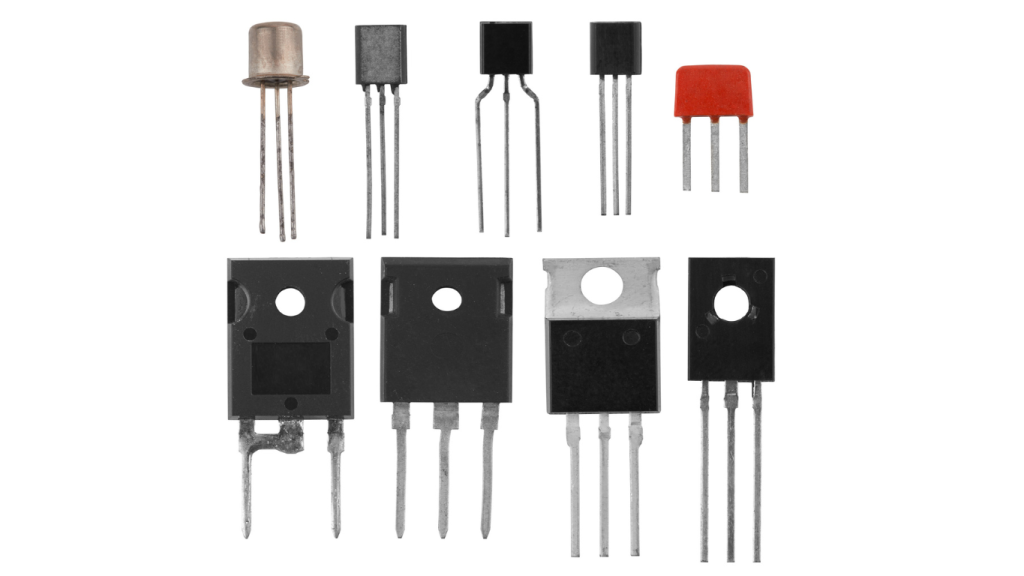
The Fundamental Role of Transistors in Modern Electronics Transistors are electronic devices that are building blocks of ICs, both analog and digital. These are among the most commonly used electronic components. That’s why almost all novel technologies use transistors in one way or another. These technologies range from bullet trains to remote control. Transistors have […]

Exploring the 1N4007 Diode Diodes are PN junction-based devices that ensure a controlled flow of electrical current in a single direction. A rectifier diode, being a semiconductor device, is characterized by high current ratings, increased reverse voltage ratings, low leakage current, and greater junction capacitance. Owing to these characteristics, diodes allow the flow of electric […]

DAC stands for Digital-to-Analog Converter. It is essentially a microchip designed to interpret the digital data, represented by zeros and ones in digital form, and subsequently convert them into analog electrical impulses. The DAC determines the scale of the analog output by using a reference voltage. This reference voltage is represented by the digital value […]