

Procurement lead times are no longer a background operational metric. For electronics manufacturers, they have become a direct business continuity risk.
When a single component fails to arrive on time, the impact is rarely isolated. Delays cascade quickly, missed production schedules, unplanned expedited shipping, and in worst cases, full line-down scenarios that disrupt customer commitments and internal planning.
Traditional sourcing models were not designed for this level of volatility. Static availability data, manual confirmation cycles, and single-source dependencies struggle to keep pace with today’s demand variability.
This is where real-time inventory sourcing changes the equation. By improving information speed and visibility, procurement teams gain faster access to fast electronic parts, enabling decisions that reduce lead times before delays become production problems.
Why Lead Times Remain a Persistent Challenge ?
Despite periodic market corrections, electronics lead times remain unpredictable. Procurement planning is consistently undermined by:
- Allocation constraints that shift with demand concentration
- Sudden demand spikes driven by design changes or market cycles
- Lifecycle mismatches where parts move faster than approved supplier lists
At the same time, procurement teams are expected to move faster, commit earlier, and absorb more risk, often with less visibility into actual availability.
The result is a widening gap between planning assumptions and sourcing reality.
Why Traditional Distributor-Led Sourcing Slows Procurement Cycles ?
Distributor-led sourcing remains essential, but it introduces structural delays when used as the sole discovery model.
Common friction points include:
- Single-distributor dependency limiting sourcing optionality
- Static catalogs that do not reflect live stock movement
- Quote-based workflows that require manual back-and-forth
- Delayed confirmations and outdated availability data
In practice, lead time is often driven by information latency, not manufacturing capacity. This is not anti-distributor, it is a recognition of information asymmetry in traditional sourcing flows.
Excess Inventory Is Not “Secondary”: It’s Strategic
Excess electronic inventory exists across the industry for predictable reasons:
- Forecasting errors
- Project cancellations or delays
- Design changes and platform transitions
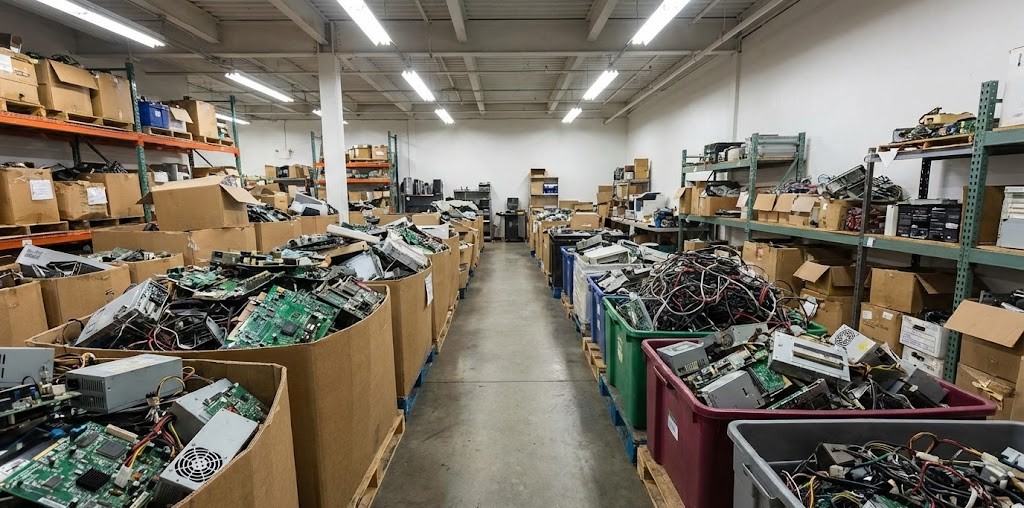
In many cases, these components are new, unused, and fully traceable, but invisible to buyers relying solely on primary distribution channels.
When made discoverable, excess inventory sourcing becomes a strategic lever for lead-time reduction rather than a secondary sourcing option.
How Excess Inventory Reduces Procurement Delays
Unlike factory-direct sourcing, excess electronic inventory offers immediate availability:
- No factory wait times
- No allocation negotiations
- Faster PO-to-delivery cycles
This makes it particularly effective for:
- Spot buys to cover shortfalls
- Production recovery scenarios
- Short-run or bridge manufacturing
With proper visibility, excess stock can compress sourcing timelines from months to days.
From Static Catalogs to Live Inventory Signals
Real-time inventory sourcing replaces periodic updates with live availability signals, including:
- Current stock levels
- Actual available quantities
- Location-aware inventory data
- Rapid multi-supplier comparison
This eliminates reliance on outdated assumptions and reduces failed sourcing attempts caused by phantom stock.
Why Real-Time Data Changes Procurement Behavior
When availability data is live, procurement workflows shift fundamentally. Reactive sourcing becomes proactive. Sequential decision-making becomes parallel.
Teams can:
- Compare suppliers instantly
- Validate availability before initiating engagement
- Reduce internal approval cycles tied to uncertainty
Information speed directly translates into sourcing speed.
The Cost of Single-Supplier and Outdated Stock Data
Limited visibility introduces hidden risk. When procurement teams rely on a narrow supplier set or outdated data, the consequences include:
- Last-minute shortages
- Emergency sourcing at premium cost
- Production halts when alternatives are not pre-identified
False confidence in availability slows procurement precisely when speed matters most.
Marketplace-Based Sourcing as a Speed Multiplier
Digital marketplaces aggregate inventory across:
- Independent distributors
- Authorized sellers
- Excess stock holders
For buyers, this creates immediate benefits:
- Supplier optionality
- Faster component discovery
- Reduced sourcing friction
Instead of serial outreach, procurement teams gain parallel visibility into fast electronic parts across the market through electronic component search and supplier discovery for procurement teams.
Comparison Without Commitment
Marketplace visibility enables procurement teams to:
- View availability without initiating RFQs
- Shortlist suppliers based on speed, not brand familiarity
- Preserve negotiation leverage by understanding market options
This supports faster decisions without forcing supplier lock-in.
From Gatekeepers to Decision Enablers
Modern procurement leadership prioritizes:
- Speed-to-decision
- Risk distribution
- Supply flexibility
Agile procurement favors visibility over exclusivity and options over assumptions. The goal is not to replace structured sourcing, but to ensure resilience when conditions change.
Complementing, Not Replacing Existing Supplier Relationships
Marketplace-based sourcing works alongside established supplier relationships by supporting:
- Gap-filling when allocations tighten
- Overflow demand during spikes
- Recovery sourcing after disruptions
Existing contracts remain intact. Digital sourcing acts as a resilience layer, not a replacement model.
Faster Data Enables Faster Procurement
Lead-time reduction starts with information speed.
Real-time inventory access enables procurement teams to make:
- Smarter sourcing decisions
- Faster adjustments to disruptions
- More confident commitments
When excess electronic inventory becomes visible and supplier options are clear, procurement agility becomes operational, not theoretical. Organizations embracing procurement digitization in electronics gain measurable advantages in sourcing speed and supply-chain resilience.
Discover Faster Sourcing with Real-Time Inventory Visibility
Partstack supports procurement teams by enabling:
- Real-time discovery of available components
- Access to excess electronic inventory across suppliers
- Faster sourcing without single-distributor dependence
Search Components on Partstack to reduce sourcing delays and maintain production momentum.