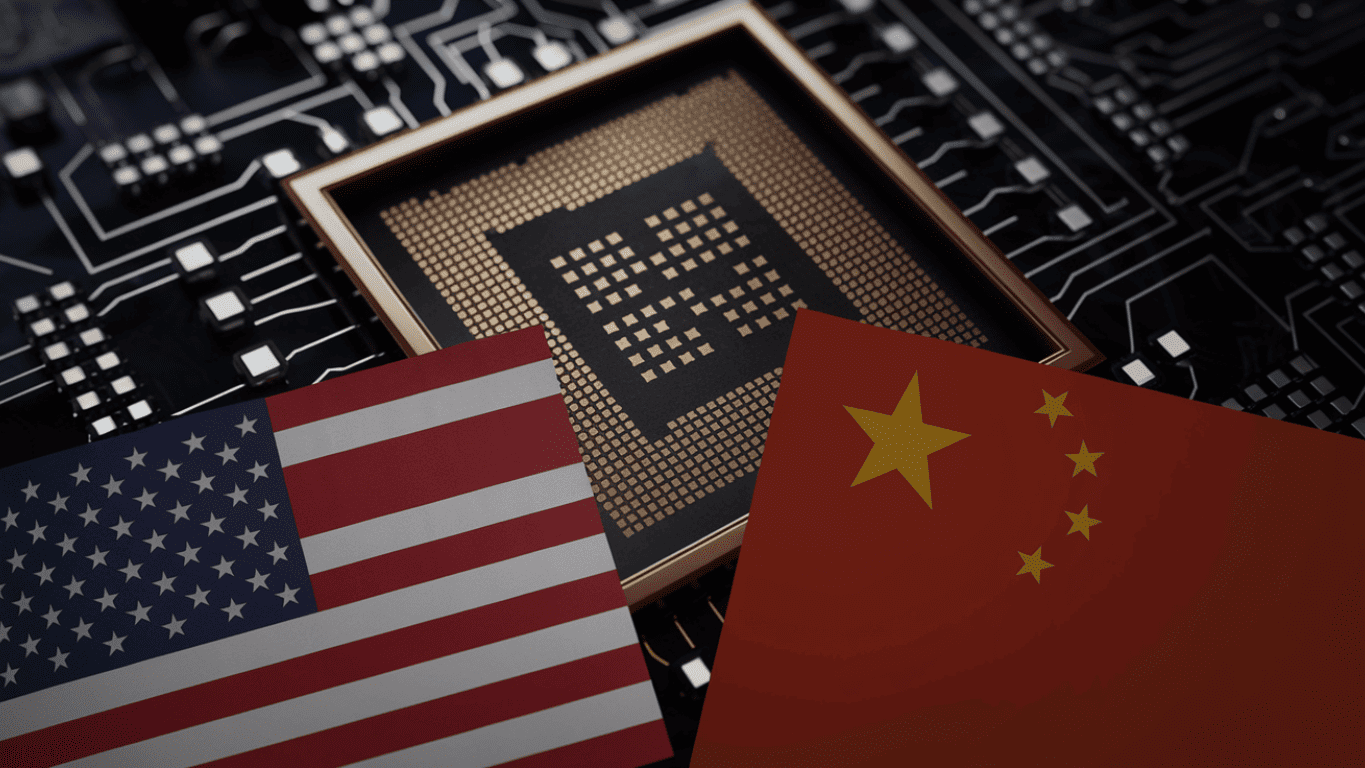


The semiconductor war between the United States and China rages on. The Biden administration will announce a new round of export restrictions targeting 140 Chinese companies, aiming to stifle China’s chipmaking ambitions. These sanctions limit China’s access to advanced semiconductor technologies crucial for artificial intelligence and defense-military applications, which the U.S. views as threats to national security.
Details of the Proposed Sanctions
According to reports from Reuters and Bloomberg, the U.S. Department of Commerce is set to unveil these restrictions, which will significantly expand the trade blacklist. The measures will:
- Blacklist Over 140 Chinese Firms: Companies such as Naura Technology Group, Piotech, and SiCarrier Technology will face new restrictions, barring them from accessing critical U.S. technology and equipment without special licenses.
- Restrict Advanced Memory Chips: Shipments of high-bandwidth memory (HBM) chips, essential for AI training and other high-performance applications, will be limited. Specifically, HBM2 and more advanced versions will fall under these restrictions. Samsung Electronics, which generates about 30% of its HBM chip revenue from China, is expected to be most affected.
- Control Chipmaking Tools: The new rules will impose restrictions on 24 additional chipmaking tools and three software tools. Equipment from Japan and the Netherlands is exempt from these new rules.
- Extend Foreign Direct Product Rule: The rule will apply to 16 Chinese companies seen as critical to China’s advanced chipmaking goals. This will allow the U.S. to regulate items with even minimal U.S. content shipped to China from overseas.
- Include Investment Firms: For the first time, private equity firm Wise Road Capital and tech company Wingtech Technology will be added to the Entity List, which prohibits U.S. suppliers from shipping to them without special approval.
China’s Strong Response
China has condemned the sanctions, calling them disruptive to the international trade order and harmful to global supply chains. At a press briefing, Lin Jian, a spokesperson for China’s Ministry of Foreign Affairs, stated, “These actions undermine global stability and the rights of Chinese firms.”
China’s Ministry of Commerce has vowed to take “necessary actions” to safeguard its companies’ interests, reflecting Beijing’s ongoing push for self-reliance in the semiconductor sector. Despite recent advancements, China remains heavily dependent on imported high-end tools and chips, particularly for AI and advanced applications.
Impact on China’s Semiconductor Industry
The sanctions deal a significant blow to China’s semiconductor ambitions, targeting critical players in its chipmaking ecosystem. In addition to major companies like Semiconductor Manufacturing International Corp. (SMIC), which has been under U.S. restrictions since 2020, the blacklist will also affect over 100 toolmakers, two dozen semiconductor firms, and two investment companies.
While China has made strides in developing some domestic chipmaking technologies, such as etching and film deposition, its reliance on foreign tools like lithography systems remains a major obstacle. Experts suggest these restrictions will temporarily hinder China’s ability to achieve its goals for semiconductor self-sufficiency.
Broader Implications for US-China Relations
The sanctions represent the third major wave of chip-related restrictions under the Biden administration, following earlier measures introduced in October 2022. These efforts underscore Washington’s goal of maintaining a technological edge while addressing national security concerns.
Effects on U.S. Companies
The impact on U.S. companies like Lam Research, KLA, and Applied Materials is significant, as China constitutes a large share of their revenue streams. The ripple effects could disrupt these companies’ market positions and financial stability.
Global Supply Chain Disruptions
The global semiconductor supply chain, already fragile due to geopolitical tensions, is likely to experience further disruptions. Equipment from U.S., Japanese, and Dutch manufacturers produced in other countries is now subject to stricter controls. However, exemptions granted to Japan and the Netherlands highlight the U.S.’s efforts to coordinate with allies while isolating China.
Navigating a Fragile Tech Landscape
The latest U.S. sanctions on China’s semiconductor industry mark a critical juncture in the ongoing tech standoff between the two nations. As Washington tightens its grip to safeguard its strategic interests, Beijing remains resolute in countering these efforts.
The consequences of this prolonged conflict are far-reaching, threatening innovation, global supply chains, and economic stability. While the world’s two largest economies continue their battle for technological supremacy, the international community faces growing uncertainty about the future of the semiconductor industry and global trade.

Audrey Sivasothy is a Houston-based technical writer with extensive experience in regulatory compliance, quality auditing, and policy analysis. Her expertise spans medical, defense, and aerospace industries, including over a decade in semiconductor distribution compliance. Audrey’s writing combines her technical industry knowledge with policy and legal insights and offers readers a unique perspective on major industry regulations, news, and developments. Sivasothy is a graduate of Rice University and a JD candidate specializing in business and compliance law.