A crystal device uses mechanical resonance to achieve precise frequency output. Most crystals are cut from quartz and used in electronics for frequency control. A popular alternative to quartz crystal oscillators is ceramic resonators. Resonators are smaller in size and have a lower cost. Developers can use crystal technology to form oscillators, as it operates via the piezoelectric effect.
There are several types of crystals, such as oscillators contained with the package (SPXO), crystals capable of voltage regulation (VCXO), TCXO, oven-controlled crystal oscillators (OCXO), and frequency-controlled crystal oscillators (FCXO). The different types of resonators include coaxial, dielectric, ceramic, crystal, yttrium iron garnet (YIG), and surface acoustic wave (SAW).
A Brief History of Crystals and Resonators
Alexander M. Nicholson built the first crystal-controlled oscillator in 1917 (and patented it in 1918) at Bell Telephone Laboratories. Walter Guyton Cady later built the quartz crystal oscillator in 1921. Louis Essen and G.W. Pierce also made quartz crystal oscillators. The 1920s and 1930s saw quartz crystal oscillators developed for high-stability frequency references. By 1926, these devices controlled the frequency of many broadcasting stations.
In the 1950s, several firms started building crystal oscillators for electronic use. Today, crystal and resonator technology have improved a lot.
What Are Crystals in Electronics?

A crystal oscillator is an electrical circuit that uses the resonance of vibrating crystals to create electrical signals that carry a precise high frequency. The frequency tracks time precisely, so it’s essential in modern electronics, particularly in digital integrated circuits found in receivers and radio transmitters.
Quartz Crystal
Quartz is the most prevalent type of crystal, but other piezoelectric materials like ceramic are also used. It’s a naturally occurring silicon form, but manufacturers now synthetically produce it to capitalize on its vast range of crystal applications. Quartz is the most common type of crystal oscillator.
The advantages of a quartz crystal include the following:
- It can behave like an RLC circuit composed of a resistor, capacitor, and inductor with a precise resonant frequency.
- It generates a constant signal.
- Synthetic quartz crystals are cheap and easy to make.
- It’s available in a wide range, from a few KHz to MHz
- Quartz crystals are remarkably stable with respect to temperature and time.
Disadvantages include:
- Highly specified quartz crystals cost more.
- They have a fixed crystal frequency that cannot be altered.
What Are Resonators?
A resonator fulfills a similar function to crystals: it vibrates mechanically after applying an electric current. However, unlike an active crystal oscillator, a resonator is a passive device. So its impedance value changes rapidly over a narrow frequency range. Therefore, it functions as the core of the feedback network as part of an oscillator’s internal mechanism.
The common types of resonators include:
1. Ceramic Resonator
This is often used instead of quartz crystals as a signal generator or reference clock in electronic circuitry. Two advantages of a ceramic resonator are its low cost and low performance requirements. Additionally, it’s half the cost of crystals and comes in smaller sizes, too. But compared to crystals, ceramic resonators lack frequency and temperature stability.
2. Surface Acoustic Wave (SAW)
This is a low-cost device that operates on a received radio frequency (RF) signal or wirelessly without requiring an additional power source. It is used for its stable frequencies, sources, and filters.
3. MEMS (Micro-Electromagnetic Systems)
These are micro-electromechanical systems vibrating at high frequencies. Manufacturers use them for timing references, mass sensing, signal filtering, motion sensing, biological sensing, and other resonator applications.
The benefits of MEMS technology include higher accuracy, selectivity, and sensitivity. However, these devices have high fabrication and assembly unit costs for low quantities. They also require expensive testing equipment.
Factors to Consider When Choosing Crystals and Resonators
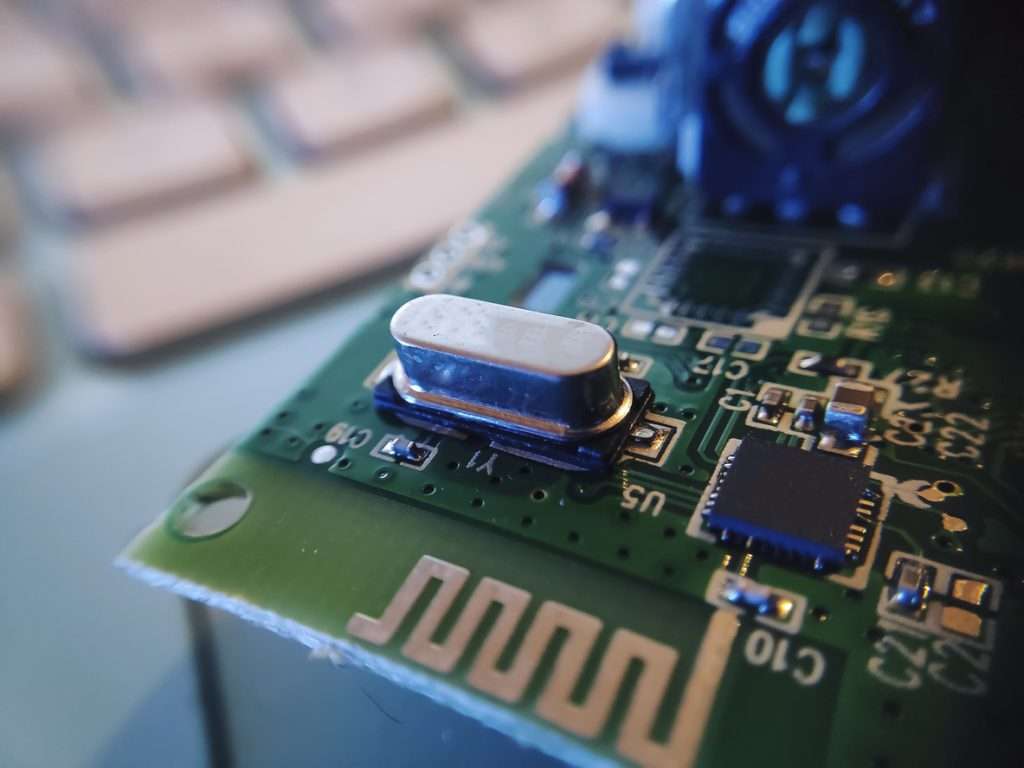
Below are the factors to consider when shopping for the right crystal or resonator.
1. Frequency Range and Stability
The crystal’s Q determines its frequency range and stability. ‘Q’ is a dimensionless parameter that describes underdamped resonators or oscillators. The frequency tolerance of a crystal is its allowable deviation from specified frequencies when measured at room temperature. The frequency stability is the allowable deviation over the device’s rated temperature range.
2. Temperature Range and Stability
Crystal oscillators start exhibiting operational instability at a temperature below -55°C.
3. Vibration and Shock Resistance
Vibration and shock sensitivity are also good considerations when choosing the right resonator or crystal. However, vibration sensitivity can have a detrimental effect on the overall system performance.
4. Application-Specific Requirements: Size and Cost
Crystals come in bigger sizes than resonators, making them more expensive.
Choosing the Right Crystals and Resonators for Your Project
Choosing the right crystal oscillator or resonator for your project depends on several factors, and your choice should reflect the essence of reducing cost and complexity. Some devices are more complex and costly than others.
Additionally, depending on your project, you also need to look at the functional properties discussed above, including:
- Electrical properties like frequency range and stability
- Temperature range and crystal stability
- Environmental factors like shock and vibration resistance
- Application-specific requirements like size
One of the common mistakes to avoid when selecting and using crystals and resonators is only considering the cost of the device instead of looking at all the above factors and features.
Applications of Crystals and Resonators
Crystal oscillators are used in frequency devices such as sensors, disk drives, medical devices, cable television, radio and communication systems, computers, global positioning systems (GPS), and video cameras. Cutting-edge crystal technology is used in the following industries:
- Computing
- Automotive
- Medical
- Industrial
- Telecommunications
- Consumer technology
- Aerospace
- Defense
On the other hand, resonators are used in microwave devices and optics to design oscillators, antennas, filters, and energy-trapping devices.
Future Trends in Technology
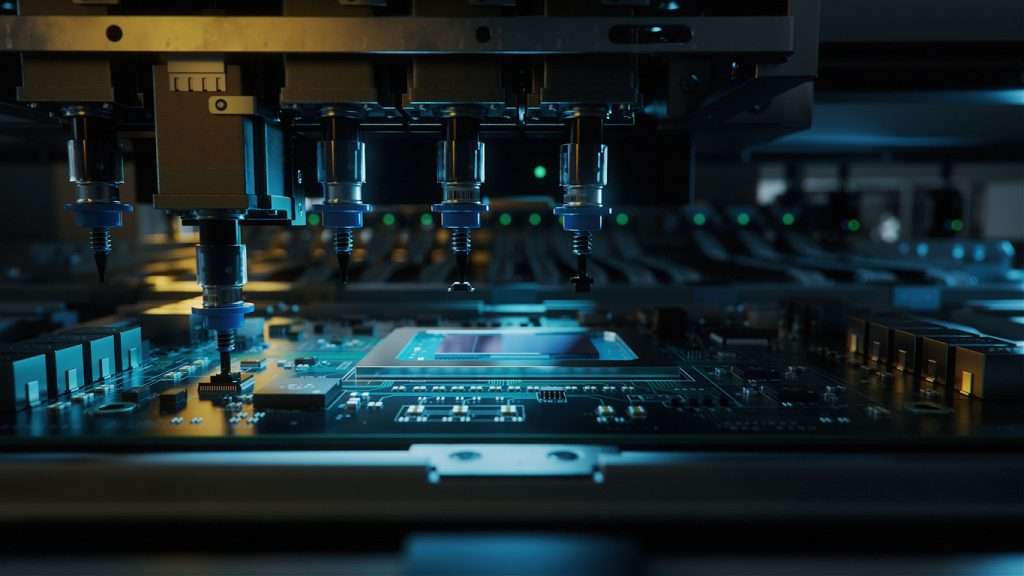
There are several emerging trends in resonator and crystal technology due to the presence of these devices in virtually all frequency control equipment. For example, one emerging trend is the development of quartz piezoelectric sensors.
Additionally, progress in the design of crystals and resonators has solved many of the previous limitations of these devices—for example, rotated crystals and the use of one crystal on more than one frequency.
Other trending design improvements in crystal technology include:
- Improvements in low aging, fast warming, and low external pressure variation sensitivity
- Improvements in commercially available units for different industries ranging from the watch industry to space exploration
- Boundary conditions at a vibrating body limit leading to the development of “unelectroded” crystals or quartz monolithic mount resonators
The future of crystal and resonator technology includes better short-term stability performance, aging, environmental sensitivity, and application-specific product designs.
Get the Benefits of Cutting-Edge Crystal Technology for Your Next Project
A crystal device uses mechanical resonance to achieve precise frequency output. The common types of crystals include piezoelectric materials like quartz and ceramic. Resonators have a smaller size and come at a lower cost than crystals. The common types of resonators include ceramic, surface acoustic waves (SAW), and MEMS.
Choosing the right crystal or resonator for your project depends on several features such as frequency range and stability, temperature range, vibration and shock resistance, and application-specific requirements like size and cost. In addition, the sector is also experiencing numerous new trends and developments with the potential to impact different industries.
Find the right crystal technology or resonator for your electronic project with PartStack’s wide section of high-quality electronic components from top brands like Abracon, Murata, and Texas Instruments. Whether you need a specific type of crystal or resonator for a specialized application or a general-purpose component for your project, we offer a wide range of options. Find your next crystal resonator with us today.
Partstack’s editorial team is made up technical writers and engineering folks from around the world.